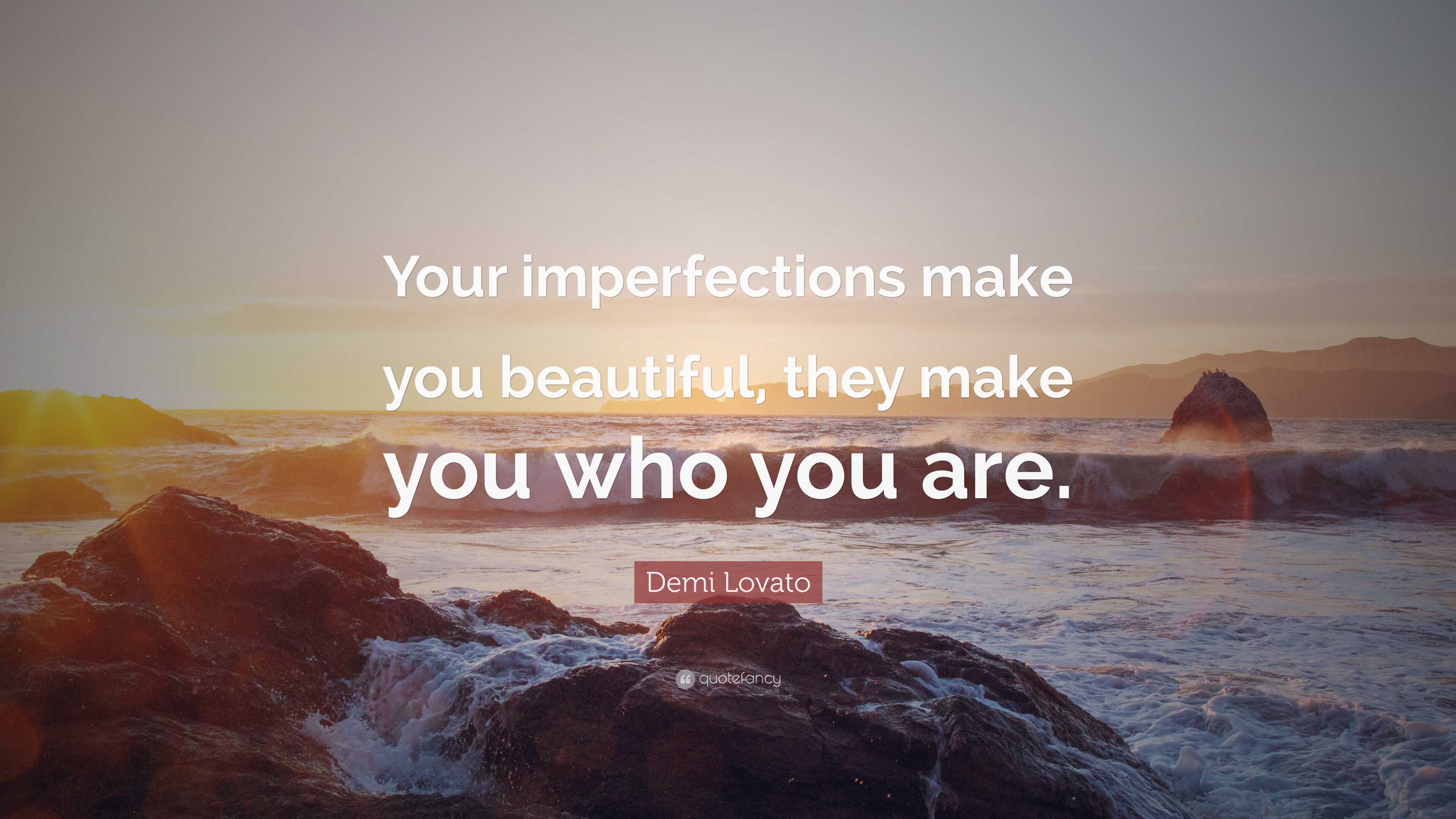
You scroll through your feed. Another flawless filtered face. Another curated highlight reel. Another wave of quiet comparison. Then—Demi Lovato’s voice cuts through the noise: “Your imperfections make you beautiful. They make you who you are. So just be yourself. Love yourself for who you are.”
It’s not just a quote. It’s a rebellion. One line dismantles the myth of perfection that dominates modern life. And it comes from someone who’s lived the cost of chasing it.
Demi Lovato isn’t just a pop star. They’re a survivor. A mental health advocate. A public figure who’s battled addiction, eating disorders, identity struggles, and industry pressure—and spoken truth at every turn. When they say imperfection is beautiful, they’re not quoting a self-help book. They’re quoting lived experience.
This quote of the day isn’t fluff. It’s philosophy rooted in pain, persistence, and hard-won wisdom. And it opens a deeper conversation: about happiness, struggle, human nature, and what real success looks like.
Let’s break it down—not as fans, but as people trying to live more honestly.
Why This Quote Resonates in a Culture of Perfection
We’re conditioned to fix, filter, and falsify. Social media rewards polish. Workplaces reward productivity over presence. Relationships often demand performance over vulnerability.
Demi’s message flips the script: Your flaws aren’t liabilities—they’re signatures.
Think about it: - The scar from your fall teaches resilience. - The stutter in your speech reveals a moment of courage. - The anxiety you manage daily proves strength, not weakness.
But we hide them. We edit. We apologize.
Yet, audiences connected deeply when Demi performed raw, stripped-down versions of songs after rehab. Not because the vocals were technically perfect—but because they were true. The cracks in the voice carried more power than any flawless note ever could.
Real example: In 2018, after a near-fatal overdose, Demi returned not with a polished comeback single, but with “Sorry Not Sorry”—a defiant anthem of self-reclamation. No euphemisms. No facade. That authenticity fueled its success. It wasn’t just a song—it was a statement: I’m still here. I’m still me.
The Psychology Behind “Imperfections Make You Beautiful”
This isn’t just poetic phrasing. It’s backed by psychology.
1. The “Beautiful-Imperfect” Effect Studies in social perception show that people who display minor flaws—like admitting a mistake or showing vulnerability—are often more likable than those who appear flawless. This is known as the Pratfall Effect. A perfect persona feels unrelatable. A human one feels trustworthy.
2. Self-Compassion Over Self-Esteem Psychologist Kristin Neff’s research emphasizes that self-esteem often depends on achievement. Self-compassion, however, thrives in imperfection. It says: You’re worthy, even when you fail. That’s exactly what Demi’s quote promotes—love without conditions.
3. Identity Integrity When we suppress parts of ourselves to fit in—our quirks, our trauma, our true sexuality or gender identity—we fracture our sense of self. Living authentically isn’t just fulfilling—it’s mentally protective.
Demi’s journey with bipolar disorder and addiction underscores this: hiding the struggle worsened it. Owning it began the healing.
The Hidden Cost of “Just Be Yourself” Advice
“Just be yourself” sounds simple. But it’s one of the hardest things to do.
Why? Because being yourself often comes with consequences.
- Speak up at work? You might be labeled “aggressive.”
- Share your mental health story? You might be seen as “unstable.”
- Come out publicly? You risk rejection.
Demi faced all of this. As a young star on Disney, they hid their struggles to maintain a “safe” image. The pressure nearly killed them.
So “just be yourself” isn’t a lazy suggestion—it’s a radical act of courage. And it requires systems of support.
Common mistakes people make: - Waiting for confidence to “arrive” before being authentic (spoiler: it doesn’t work that way) - Confusing self-expression with oversharing (boundaries still matter) - Thinking acceptance comes from others first (real change starts within)
The truth? You don’t need permission to be you. But you do need practice.
Life Lessons on Happiness: Redefining the Goal
Demi’s quote challenges a core myth: that happiness comes from fixing yourself.
We chase happiness like it’s a destination—once I lose weight, once I get the job, once I’m “together,” then I’ll be happy.
But real happiness—sustainable, grounded happiness—often emerges from acceptance, not achievement.
Consider Demi’s evolution: - Early career: Happiness = fame, love, control. - Mid-career: Collapse under pressure, addiction, hospitalization. - Now: Happiness = therapy, boundaries, self-advocacy, creativity on their terms.
That’s not a fall from grace. It’s a rise to authenticity.
Practical takeaway: Instead of asking, How can I be happier? try asking: - What parts of myself am I still at war with? - Where am I pretending? - What would it feel like to stop performing?
Answering these won’t give you instant joy. But it builds the foundation for lasting peace.
Struggle Isn’t the Enemy—It’s the Teacher
Demi didn’t say, “Your imperfections are cute.” They said, “They make you who you are.”
There’s power in ownership.
Think of struggle not as failure, but as data. - A failed relationship? It reveals your boundaries—or lack thereof. - A panic attack at work? It signals misalignment with your values. - Relapse after sobriety? It shows where support systems broke down.
Demi’s openness about relapse in 2018 was controversial. Some criticized them. But many said: Finally, someone who admits recovery isn’t linear.
That honesty gave others permission to be kinder to themselves.
Limitation to remember: Vulnerability is powerful—but it’s not obligation. You don’t have to share your story publicly to benefit from self-acceptance. Healing can happen in private, too.
Human Nature: We’re Wired for Connection, Not Perfection
At our core, humans crave connection. But perfection blocks it.
Why? Because connection requires mutual visibility.
If you only show your highlights, others feel pressured to do the same. No one admits to anxiety, failure, or loneliness. The result? Isolation in plain sight.
Demi’s music—especially tracks like “Skyscraper” and “Anyone”—works because they expose fragility. And when that vulnerability is met with love, it creates a feedback loop of healing.
Realistic use case: A manager shares in a team meeting: “I’ve been struggling with focus lately. Therapy helped me see it’s burnout, not laziness.” Result? Team members feel safer discussing workload. Productivity improves. Trust deepens.
Imperfection, shared wisely, becomes leadership.
Success, Redefined: Beyond Awards and Albums
Demi Lovato has Grammy nominations, platinum records, and millions of fans. By traditional standards, they’re wildly successful.
But in interviews, they’ve said their greatest achievement isn’t a chart-topper—it’s staying alive.
That reframing is revolutionary.
True success isn't just external validation. It’s: - Waking up and choosing life, even when it’s hard - Setting a boundary with a toxic relationship - Asking for help instead of pretending you’re fine - Creating art that reflects your truth, not market demands
Demi’s pivot to advocacy—launching mental health platforms, speaking in Congress, normalizing therapy—shows where their values now lie.
Actionable insight: Audit your definition of success. Ask: - Am I measuring myself by someone else’s ruler? - Would I consider myself successful if no one ever knew? - What would “enough” look like, if I defined it myself?
How to Live
This Quote Every Day
This isn’t about one inspirational moment. It’s about daily practice.
- Workflow tips:
- Morning check-in: Instead of scrolling, ask: Who do I want to be today—not perform, but be?
- Embrace “and” thinking: You can be confident and afraid. Strong and sensitive. Successful and struggling.
- Keep a “Permission List”: Write down things you’ve judged yourself for (crying at work, saying no, making mistakes). Next to each, write: This doesn’t make me less. It makes me human.
- Consume media mindfully: Unfollow accounts that make you feel “less than.” Follow voices like Demi’s that normalize realness.
- Speak your truth—small: Start with low-stakes honesty. “I’m not okay” to a friend. “I need a break” at work.
Progress isn’t about never doubting yourself. It’s about returning, again and again, to self-acceptance.
Final Thought: Your Story Matters—Flaws and All
Demi Lovato’s quote of the day isn’t just a feel-good line for a Instagram post. It’s a manifesto.
It says: You don’t need to earn love. You don’t need to hide your scars. You don’t need to become someone else to be worthy.
Your struggles? They’re part of your strength. Your quirks? They’re part of your charm. Your journey? It’s uniquely yours.
In a world that profits from your insecurity, choosing self-love is resistance. And in choosing it daily, you don’t just transform yourself—you give others permission to do the same.
Start here. Start now. Just be you.
FAQ
What is Demi Lovato’s most famous quote about self-love? One of their most quoted lines is: “Your imperfections make you beautiful. They make you who you are. So just be yourself. Love yourself for who you are.”
Has Demi Lovato spoken about mental health publicly? Yes—extensively. They’ve discussed bipolar disorder, addiction, eating disorders, and the importance of therapy, becoming a leading advocate for mental health awareness.
How can I practice self-acceptance daily? Start with small acts: speaking kindly to yourself, setting boundaries, journaling without judgment, and consuming media that reflects real human experiences.
Is it okay to not be okay? Absolutely. Acknowledging struggle is not weakness—it’s honesty. Emotional resilience comes from facing feelings, not suppressing them.
What does real success look like, according to Demi Lovato? Beyond fame and awards, Demi defines success as staying alive, advocating for others, living authentically, and using their platform for healing.
How does imperfection build connection? When we share our real selves—including flaws—others feel safe to do the same. This mutual vulnerability creates deeper, more meaningful relationships.
Can self-love coexist with self-improvement? Yes. Loving yourself doesn’t mean complacency. It means growing from a place of worth, not shame. You improve because you care, not because you’re “not enough.”
FAQ
What should you look for in Demi Lovato's Quote of the Day: Embrace Imperfection, Find Strength? Focus on relevance, practical value, and how well the solution matches real user intent.
Is Demi Lovato's Quote of the Day: Embrace Imperfection, Find Strength suitable for beginners? That depends on the workflow, but a clear step-by-step approach usually makes it easier to start.
How do you compare options around Demi Lovato's Quote of the Day: Embrace Imperfection, Find Strength? Compare features, trust signals, limitations, pricing, and ease of implementation.
What mistakes should you avoid? Avoid generic choices, weak validation, and decisions based only on marketing claims.
What is the next best step? Shortlist the most relevant options, validate them quickly, and refine from real-world results.