Most safety toolbox talks fail before they start. They’re rushed, scripted, or recycled from last week’s template with minor tweaks. Workers zone out. Supervisors check a box. And risks go unaddressed—until an incident happens.
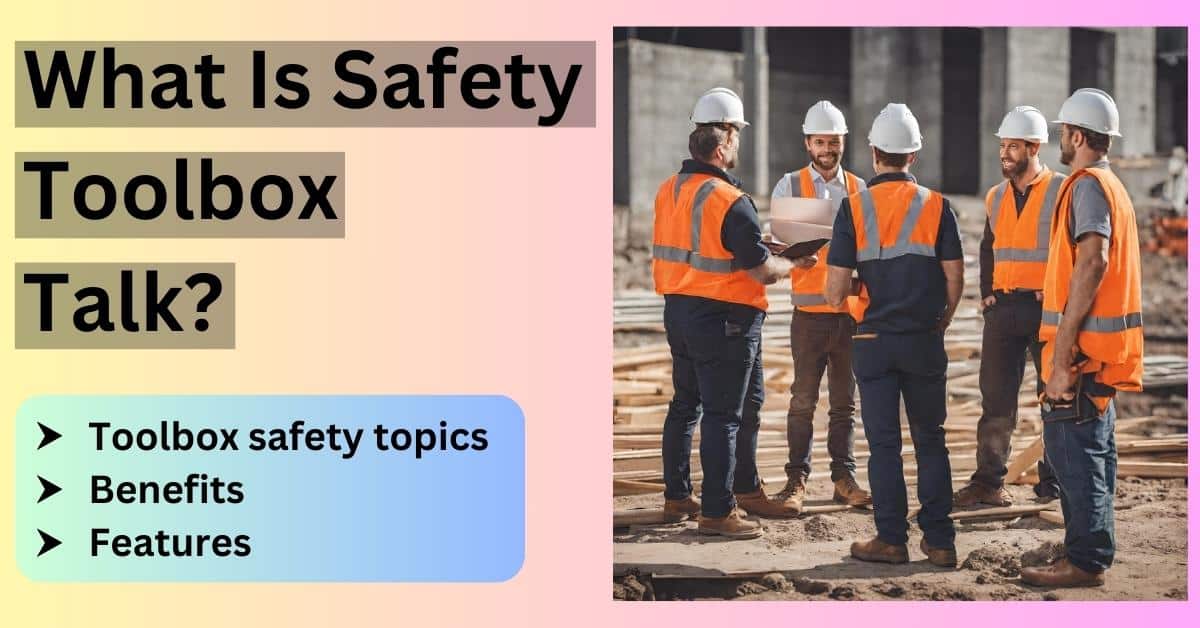
The truth? Effective toolbox talks aren’t about compliance. They’re about conversation. The best ones target real hazards, spark dialogue, and connect to what crews are doing right now. They last 5 to 10 minutes, hit hard, and leave workers thinking.
This guide breaks down the most impactful safety toolbox talk topics, with practical examples and delivery tips that actually change behavior—not just fill a logbook.
Why Most Toolbox Talks Fail (And How to Fix Them)
Too many toolbox talks are monologues disguised as safety. A supervisor reads from a printed sheet. Everyone nods. Five minutes later, the crew is back on the job—no different than before.
Common pitfalls: - Generic content: “Slips, trips, and falls” without linking to current site conditions. - No engagement: No questions, no feedback, no eye contact. - Poor timing: Held when crews are rushing to start or already fatigued. - One-size-fits-all: Same talk for welders, electricians, and forklift operators.
Fix it by making every talk: - Relevant: Tied to the day’s tasks or recent near-misses. - Interactive: Ask questions, encourage workers to share experiences. - Visual: Use photos of actual site conditions or equipment. - Action-oriented: End with one clear takeaway or change.
Example: Instead of saying “Wear your PPE,” show a photo of a frayed harness strap found on-site yesterday. Ask: “What would you have done if you’d spotted this during pre-use inspection?”
Essential Toolbox Talk Topics for High-Risk Work
Focus on high-consequence, high-frequency hazards. These topics consistently drive behavior change when delivered well.
1. Fall Protection – Beyond the Basics
Everyone knows “tie off when above 6 feet.” But nuances get missed.
Key discussion points: - Anchor point selection: Is it rated? Is it directly above? - Harness fit: Can the worker self-rescue if suspended? - Edge protection: Is guardrail sufficient or will travel restraint be used?
Real example: On a roofing job, a worker tied off—but used a rebar stub as an anchor. The metal bent under load. Talk about proper anchorage using actual site examples.
2. Lockout/Tagout (LOTO) – The Hidden Gaps
LOTO procedures exist, but shortcuts happen. A 2023 OSHA report found 68% of LOTO violations involved improper isolation or testing.
Focus the talk on: - Verifying zero energy: Is it locked, tagged, and tested? - Group LOTO: Who is the authorized employee? How is communication handled? - Stored energy: Springs, hydraulics, capacitors—what’s often overlooked?

Pro tip: Bring a real lockout kit. Have a crew member demonstrate isolating a piece of equipment.
3. Hazard Communication – Understanding the Labels
Workers see GHS labels daily. Few can explain what the pictograms mean—or what to do if exposed.
Make it practical: - Show a real container from site. Walk through SDS sections 2, 4, and 8. - Ask: “If this spilled, would you know the PPE required? The first aid steps?” - Emphasize that “familiar” doesn’t mean “safe.”
Common mistake: Assuming training = understanding. Re-test knowledge monthly with quick verbal checks.
4. Hot Work Safety – It’s Not Just the Flame
Welding, cutting, grinding—these tasks ignite more fires than most realize.
Critical points: - Fire watch duration: 30–60 minutes post-work, not just during. - Combustible clearance: What’s within 35 feet? Includes sawdust, rags, vapors. - Permit review: Is atmospheric testing done if in a confined space?
Use case: A grinder spark ignited solvent fumes in a poorly ventilated area. The fire watch wasn’t assigned. Use this as a case study.
5. Ergonomics – Preventing Silent Injuries
Strains and sprains account for 30% of lost-time injuries. Yet they’re rarely discussed in toolbox talks.
Target specific tasks: - Lifting techniques: Use team lifts for loads over 50 lbs. - Repetitive motion: Rotate duties when possible. - Tool vibration: Monitor exposure time with grinders or jackhammers.
Engagement idea: Have workers demo lifting a heavy pipe. Then correct form in real time.
Industry-Specific Topics That Hit Harder
Generic topics have their place. But relevance drives retention.
Construction: Working Near Excavations
- Soil type matters: Is it stable? Has it rained recently?
- Protection methods: Sloping, shoring, shielding—what’s in the plan?
- Egress: Is there a ladder within 25 feet?
Ask: “Would you enter a 5-foot trench without a permit or protection? Why or why not?”
Manufacturing: Machine Guarding
- Guards removed for “quick fixes” are the #1 cause of amputations.
- Talk about point-of-operation, power transmission, and control safeguards.
- Show a photo of a machine with missing guards—ask workers to identify risks.
Utilities: Overhead Power Lines
- 10 feet is the minimum, but 20+ is safer for high voltage.
- Use spotters when operating cranes, booms, or dump trucks.
- Grounding procedures for downed lines.
Real example: A telehandler contacted a power line because the spotter was distracted. Emphasize constant vigilance.
How to Deliver a Toolbox Talk That Sticks
Even the best topic fails with poor delivery.
Structure It Right
- State the hazard (1 min): “Today, we’re talking about pinch points on excavators.”
- Relate it to today’s work (1 min): “We’re setting pipe near the backhoe all afternoon.”
- Ask questions (2–3 min): “Where are the pinch points? How do you stay clear during operation?”
- Review controls (1 min): “Keep 6 feet away when operating. Use the spotter.”
- Confirm understanding (1 min): “John, what would you do if you saw someone walking near the swing radius?”
Engagement Tactics
- Cold call respectfully: “Maria, you’ve operated this loader—what’s one thing you watch for?”
- Use visuals: Bring a damaged glove, a photo of a near-miss, or a sample permit.
- Keep it short: 7 minutes is ideal. Respect their time.
Insight: Workers participate when they feel heard. Acknowledge their input—even if it’s critical.
Common Mistakes That Undermine Safety Talks
Avoid these costly errors:
| Mistake | Impact | Fix |
|---|---|---|
| Reading verbatim | Disengagement | Use bullet points, not scripts |
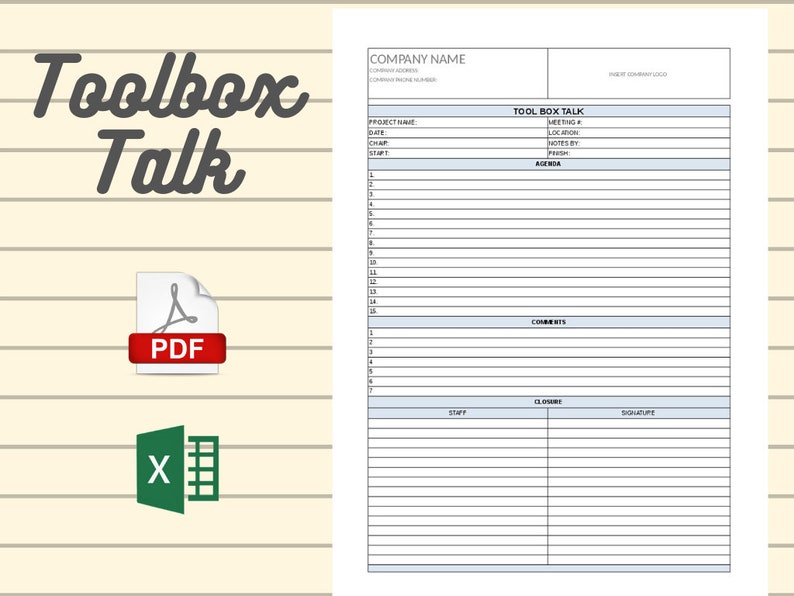
| Skipping attendance | No accountability | Sign-in sheet with printed names |
| No follow-up | No behavior change | Walk the site later—verify compliance |
| One person dominates | Others disengage | Rotate facilitators weekly |
Also: Never punish someone for admitting a mistake during a talk. That kills psychological safety—and future honesty.
Sample Toolbox Talk: Working at Height
Topic: Proper Use of Fall Arrest Systems Duration: 8 minutes Location: Rooftop staging area
Script Outline: - “We’re installing HVAC units today—working at 28 feet.” - Show harness and lanyard: “This one expired last month. Would you wear it?” - Ask: “Where should your anchor point be?” - Demonstrate double-lanyard technique for edge work. - Confirm: “Who checks their harness before each use?”
Sign-in: All crew sign, including subcontractors.
Follow-up: Supervisor checks harness tags during the shift.
Building a Sustainable Toolbox Talk Program
The goal isn’t to check a box. It’s to build a culture where safety is part of the workflow.
Best practices: - Rotate facilitators: Empower workers to lead talks. They bring real insight. - Link to JSA: Align talks with the day’s Job Safety Analysis. - Use near-misses: Turn incidents into learning moments—without blame. - Track topics: Avoid repetition. Use a 4-week rotation plan.
Example: One company reduced recordables by 42% in six months simply by making talks interactive and hazard-specific.
Final Takeaway: Make It Real, Make It Relevant
The best safety toolbox talk topics don’t come from a manual. They come from your site, your crew, and your recent close calls.
Forget “general safety reminders.” Talk about the frayed cable you saw yesterday. The near-miss with the forklift. The mislabeled chemical.
When workers see that the talk connects to their reality, they listen. And when they engage, they act.
Run your next toolbox talk like it matters—because it does. Pick one real hazard, ask one real question, and make one real change. Do that every day, and safety becomes second nature.
FAQ
What should you look for in Top Safety Toolbox Talk Topics That Actually Work? Focus on relevance, practical value, and how well the solution matches real user intent.
Is Top Safety Toolbox Talk Topics That Actually Work suitable for beginners? That depends on the workflow, but a clear step-by-step approach usually makes it easier to start.
How do you compare options around Top Safety Toolbox Talk Topics That Actually Work? Compare features, trust signals, limitations, pricing, and ease of implementation.
What mistakes should you avoid? Avoid generic choices, weak validation, and decisions based only on marketing claims.
What is the next best step? Shortlist the most relevant options, validate them quickly, and refine from real-world results.