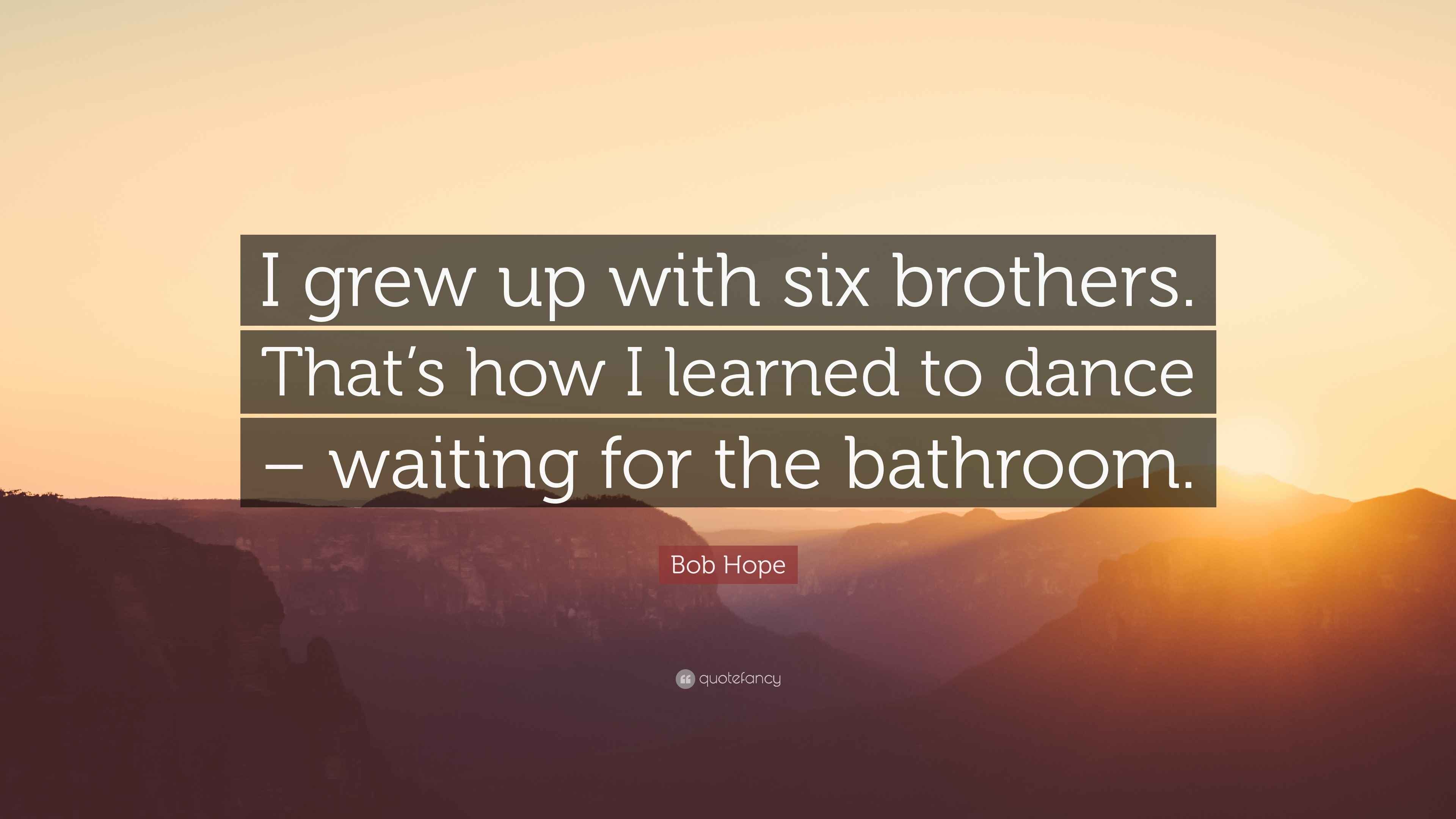
Growing up in a crowded household doesn’t just teach you how to share a bathroom—it teaches you how to survive. When Bob Hope quipped, “I grew up with six brothers. That’s how I learned to dance—waiting for the bathroom,” he wasn’t just delivering a punchline. He was revealing a deeper truth: comedy often masks wisdom, and the chaos of family life shapes character more than any formal education ever could.
This single line—frequently shared as a “quote of the day”—opens a window into Hope’s worldview, one forged in sibling rivalry, shared space, and the subtle art of timing. Behind the laughter lies insight into relationships, the passage of time, and the politics of coexistence. Let’s break down why this enduring line still resonates—and what we can learn from it beyond the chuckle.
The Humor in Hardship: Why Bob Hope’s Line Still Lands
Bob Hope didn’t rise to fame by reciting poetry. His power came from relatability. He understood that the most universal experiences—awkwardness, competition, scarcity—are also the funniest.
The quote about dancing while waiting for the bathroom works because it’s absurd and accurate. Anyone who’s lived in a large family instantly visualizes the scene: the pacing, the impatience, the choreography of daily survival. But the brilliance lies in the word dance. It transforms frustration into rhythm, struggle into performance.
This was Hope’s signature: taking tension and turning it into timing.
Real-World Example: Think of a couple juggling chores with young kids—“dancing” around each other in the kitchen at dinner time. The stress is real, but so is the humor. Hope’s line teaches us to name that chaos with wit, not resentment.
Common Mistake: People often quote this line as just a funny anecdote. But when you treat humor as mere entertainment, you miss the emotional intelligence behind it. Hope used comedy to process friction, not avoid it.
Brotherhood as a Crash Course in Relationships
Living with six brothers isn’t just about waiting for the bathroom. It’s a masterclass in human dynamics.
- Conflict Resolution: Disagreements aren’t rare—they’re routine. You learn to argue fast, forgive faster, or risk making breakfast unbearable.
- Negotiation Skills: Did you get the last pancake? Was the bathroom free at 7:02 or 7:05? These aren’t trivialities—they’re daily negotiations that build emotional agility.
- Loyalty Under Pressure: Siblings form alliances, betrayals, truces. You learn who’ll cover for you and who’ll snitch—early training for workplace politics.
Hope’s environment was a pressure cooker for social intelligence. He didn’t just observe human behavior; he was immersed in it.
Use Case: Modern professionals often struggle with office politics. But those raised in large families usually adapt quicker. They’ve already navigated complex hierarchies—birth order as corporate ladder.
Hope’s experience suggests that growing up crowded builds emotional resilience. The ability to “dance” while waiting isn’t passivity—it’s adaptive grace.
The Hidden Discipline of Timing
Comedy lives and dies by timing. So does survival in a household of seven boys.
Imagine trying to speak at dinner. You don’t get a turn by raising your hand—you grab it in the micro-silence between bites. Miss it, and you’re ignored. That’s the same split-second precision needed on stage.

Bob Hope’s legendary timing—on-screen, on radio, in front of troops—wasn’t just talent. It was muscle memory from years of competing for attention.
Workflow Insight: Great communicators often come from environments where silence wasn’t an option. They learned to: - Listen for openings - Deliver concisely - Use humor to disarm tension
This is why many successful comedians, from Richard Pryor to Tina Fey, reference chaotic upbringings. Chaos teaches efficiency.
Hope’s “dance” wasn’t just physical—it was rhetorical. Every joke was a carefully timed maneuver to survive the noise.
Aging with Grace: What Hope’s Later Years Reveal
Bob Hope lived to 100. His longevity wasn’t just genetic—it was behavioral.
The skills honed in childhood—patience, adaptability, humor under pressure—don’t expire. They compound.
As he aged, Hope didn’t retreat from public life. He kept performing, visiting troops, and making appearances. His ability to “dance” while waiting didn’t end at the bathroom door. It carried into hospital waits, industry shifts, and cultural changes.
Realistic Example: At 85, Hope performed at the Kennedy Center Honors. Critics said he was past his prime. But he wasn’t chasing relevance—he was maintaining rhythm. That’s the power of lifelong emotional choreography.
Many struggle with aging because they associate it with loss: of status, energy, control. Hope’s life suggests an alternative: aging as continued adaptation. The man who learned to dance in line kept dancing—even when the music changed.
Politics, Satire, and the Power of the Punchline
Hope didn’t shy from politics. Over decades, he performed for every U.S. president from Franklin D. Roosevelt to Bill Clinton. His comedy wasn’t neutral—but it wasn’t polarizing, either.
His brother-filled upbringing likely taught him an essential political skill: how to mock without alienating.
In a home of six brothers, you can’t burn bridges every time someone steals your towel. You learn to tease, not attack. That balance defined Hope’s political humor—sharp enough to land, kind enough to forgive.
Historical Context: During the Vietnam War, Hope toured military bases, using satire to lift morale without disrespecting service. He mocked bureaucracy, not soldiers. That nuance kept him welcome across administrations and ideologies.
Today, political humor often feels like warfare. Hope’s approach reminds us that comedy can unite—if it’s rooted in shared experience, not division.
His quote about dancing in the hallway isn’t just about siblings. It’s about coexistence. In a world of competing egos, the ability to wait—and make a joke while doing it—is a radical act of peace.
Why This Quote Still Circulates as “Quote of the Day”
You’ll find this line on calendars, social media posts, and motivational cards. But most reposts strip it of context. They share the laugh but miss the lesson.
The reason it endures isn’t just because it’s funny. It’s because it’s true on multiple levels:
| Layer | Meaning |
|---|---|
| Surface | A funny story about a crowded home |
| Emotional | Survival through humor |
| Social | Learning to navigate relationships |
| Philosophical | Grace under daily pressure |
| Cultural | The American experience of family and resilience |
Quotes go viral when they compress big truths into small packages. This one fits perfectly.
Limitation to Note: Not everyone finds humor in chaos. For some, large families meant stress, not wit. Hope’s privilege—growing up White, male, and in a stable (if loud) home—shaped his ability to laugh at the past. That context matters.
But the core idea stands: adversity, when framed right, becomes wisdom.
Applying Hope’s Lessons Today
You don’t need six brothers to benefit from this mindset. You just need to recognize that life rarely gives you perfect conditions—and that’s where character forms.
Practical Applications:
- In Relationships:
- When tensions rise, ask: Can I dance while I wait? Can you respond with humor instead of hostility? Try reframing frustration as improvisation.
- At Work:
- Office delays, meeting overruns, email pileups—they’re modern versions of the bathroom line. Use Hope’s mindset: stay light, stay ready, keep rhythm.
- With Aging:
- Instead of resisting change, practice adaptability. Take up a new skill, revisit old jokes, find joy in small routines. Keep dancing.
- In Conflict:
- Before reacting, consider: Is this worth burning a bridge? Can you tease instead of accuse? Humor disarms more effectively than anger.
- For Mental Resilience:
- Develop a “comedy lens.” When things go wrong, ask: How would Bob Hope tell this story? Reframing builds emotional durability.
Final Thought: Keep Dancing
Bob Hope’s bathroom line isn’t just a throwaway joke. It’s a philosophy disguised as a one-liner. It says: life will make you wait. People will crowd your space. Plans will stall. But you don’t have to stand there fuming.
You can dance.
That’s the real lesson—on relationships, aging, and navigating the politics of everyday life. Grace isn’t found in perfect conditions. It’s learned in the line, in the noise, in the chaos of six brothers and one bathroom.
So next time you’re stuck waiting—traffic, a slow barista, a delayed flight—don’t just wait. Dance.
And if someone asks why? Tell them Bob Hope said it was excellent rehearsal.
FAQ
What did Bob Hope mean by “I learned to dance waiting for the bathroom”? He used humor to describe growing up in a crowded home, suggesting that constant waiting taught him timing, patience, and movement—skills that later helped his comedy and stage presence.
How many brothers did Bob Hope have? Bob Hope had five older brothers and one younger brother—six in total. He was the second youngest of seven boys.
Did Bob Hope have a close relationship with his brothers? While specific details are limited, Hope often referenced his brothers in jokes, suggesting a shared, chaotic upbringing that shaped his worldview and humor.
Why is this Bob Hope quote so popular? It’s relatable, funny, and layered. It captures family life, resilience, and timing in one line—making it ideal for sharing as a “quote of the day.”
How does this quote relate to aging? It reflects how early life experiences build skills that serve us later. Hope’s ability to adapt and stay active into old age mirrored the resilience he developed as a child.
What can we learn about relationships from this quote? That friction is inevitable—but how you handle it matters. Humor, patience, and timing can turn daily struggles into lasting bonds.
Was Bob Hope’s humor political? Yes. He frequently joked about politicians and current events, but with a light, unifying touch—likely influenced by his experience navigating complex family dynamics.
FAQ
What should you look for in Bob Hope’s Quote on Brothers and Life Lessons Explained? Focus on relevance, practical value, and how well the solution matches real user intent.
Is Bob Hope’s Quote on Brothers and Life Lessons Explained suitable for beginners? That depends on the workflow, but a clear step-by-step approach usually makes it easier to start.
How do you compare options around Bob Hope’s Quote on Brothers and Life Lessons Explained? Compare features, trust signals, limitations, pricing, and ease of implementation.
What mistakes should you avoid? Avoid generic choices, weak validation, and decisions based only on marketing claims.
What is the next best step? Shortlist the most relevant options, validate them quickly, and refine from real-world results.